

What's the difference between ... ?

No, I’m not gonna tell you stupid jokes starting with “What’s the difference” instead I’m going to tell you about the differences between cameras.
You know what? Why not? A joke didn’t kill anybody, even if it’s a stupid joke.
What’s the difference between a teacher and a train? One says: “Spit that gum out”, the other one says: “Chew! Chew!”
Back to the cameras now: on 25th of July I presented you the FED 5V, a soviet made 35mm camera, link here. Back then I said that I would return and present the differences between a Soviet camera and a Japanese or German one. The FED 5V also featured on my post from September when I compared the results of using the same type of film on two different cameras.
The experience of using a FED is totally different to using a Voigtländer or a Yashica.
I think I mentioned before but in case you don’t remember, out of all my 35mm cameras, Yashica Lynx 5000 is my favourite: it has the right weight, ergonomically is very simple - all the controls are in the right place and it has an amazing lens. Most of the controls are on the lens barrel: the aperture - ranging from f/1.8 to f/22, the shutter speed - ranging from bulb to 1/1000s, the ISO control and of course the focusing ring. The fixed lens has the perfect 45mm focal length and it is very large taking a 52mm filter.
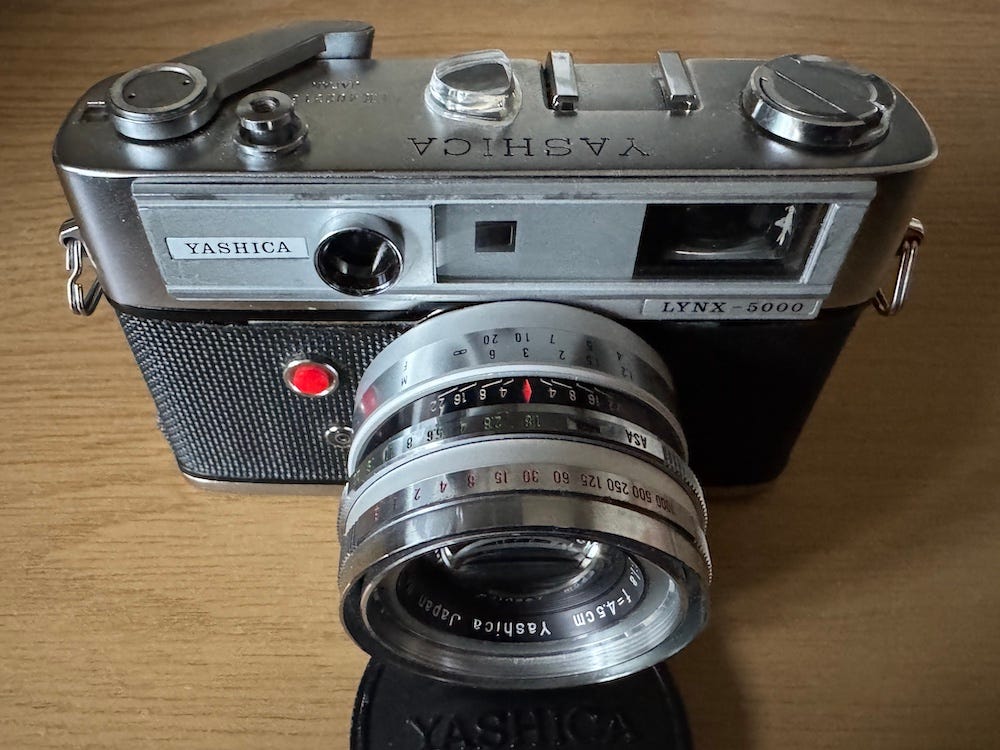
Considering that the camera was introduced in 1965, the amount of light entering the lens was a big deal making the camera a very good competitor with the famous Leica. Also, the viewfinder is very big and very bright. The shutter release button is on top of the camera and it is easily accessible. The film advance lever is not only easily accessible but also very smooth. The shutter is a Copal type situated in the lens and is silent.
The Voigtländer Vito C is the eldest 35mm camera that I own. Made in the mid 1950’s (1952–1957), the camera is light and very simple. Weighting under 500 grams, the camera doesn’t have any buttons on the top, the film advance lever is at the back and easy to manipulate, the shutter button is at the front and that makes the shaking of camera almost inexistent. The viewfinder is not as big as the one in Yashica but it’s still bigger than other cameras and bright as well.
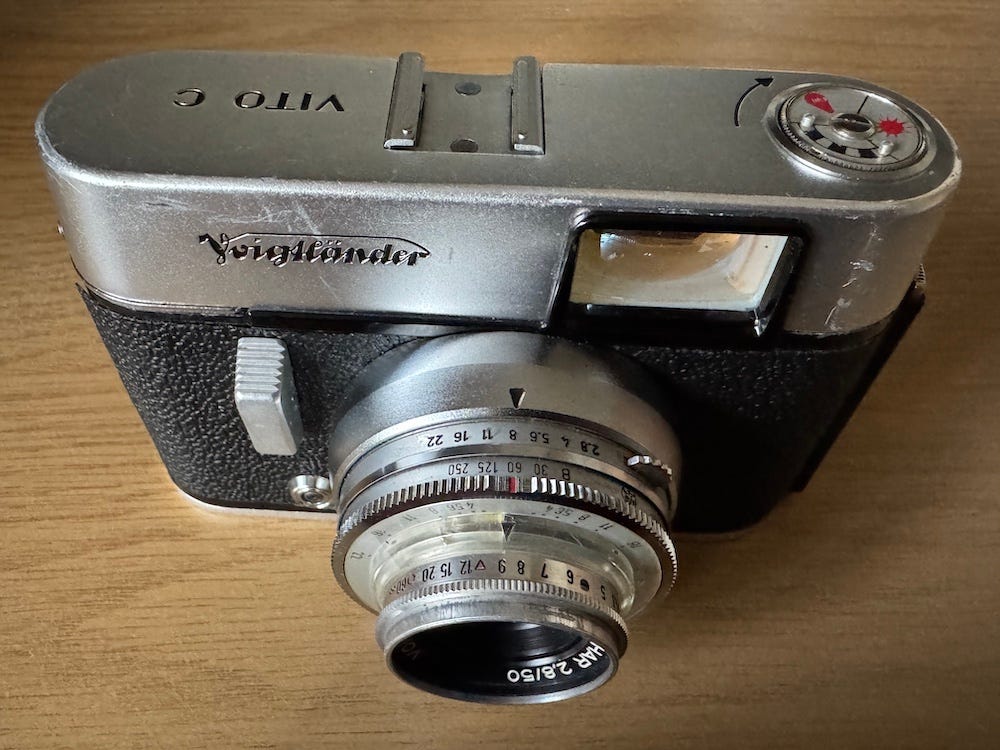
Vito C has a 50mm f/2.8 lens with an aperture that goes to f/22 and the shutter speed goes from bulb to maximum 1/250 seconds. The focusing ring is in feet and the camera doesn’t have an ISO setting.
The FED 5V is built like a tank, a Russian tank to be more precise, it is the biggest 35mm camera that I own, it’s made out of metal, some plastic and special treated glass.
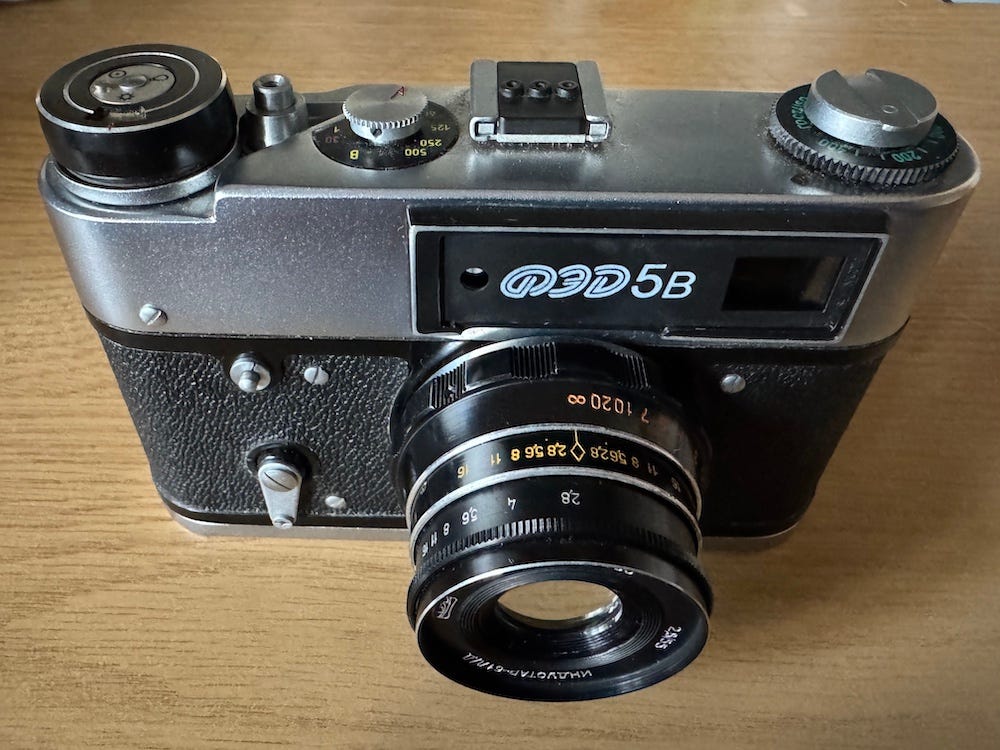
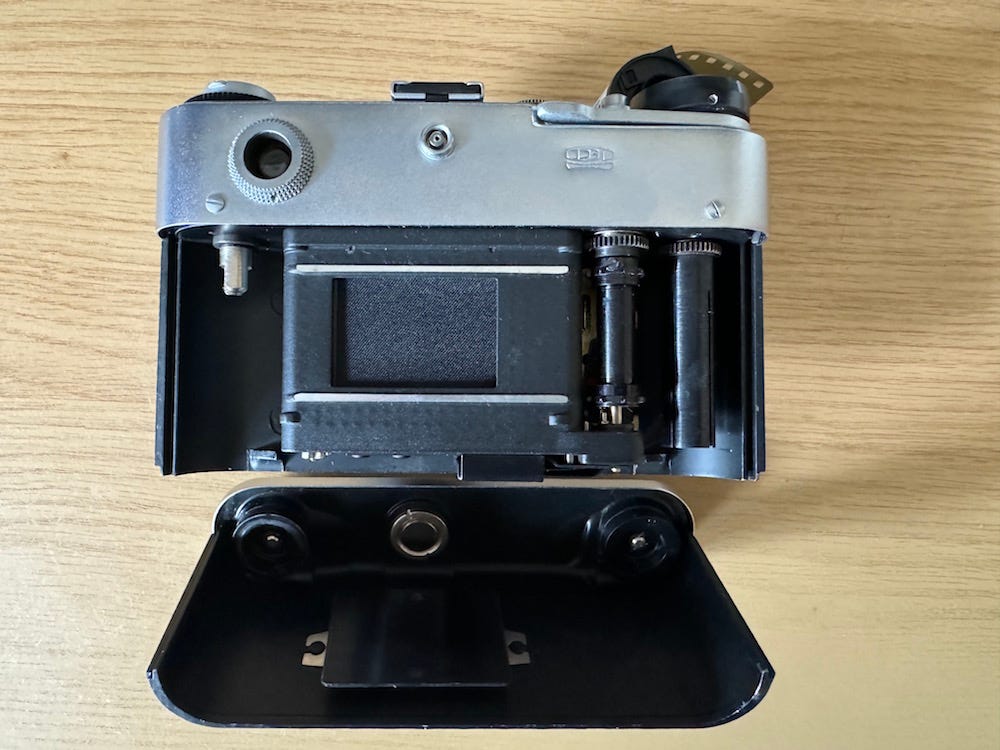
The camera started to be made in 1976 and it supposed to be a competitor to Leica rangefinder. In order to load the film, the backs of all my cameras are acting like a door that swing from left to right, that is not the case with the FED: for FED I need to completely remove the back by twisting two “screws” at the bottom, and putting it back is always a bit of a challenge.
The lens is fixed, 55mm focal length and has two rings: the aperture ranging from f/2.8 to f/16 and the focusing ring. Compared with other cameras, the amount of light entering the is very small, the diameter of the glass is less than 20mm. The viewfinder on the back is not only round in shape but it’s also very small making it difficult to look through.
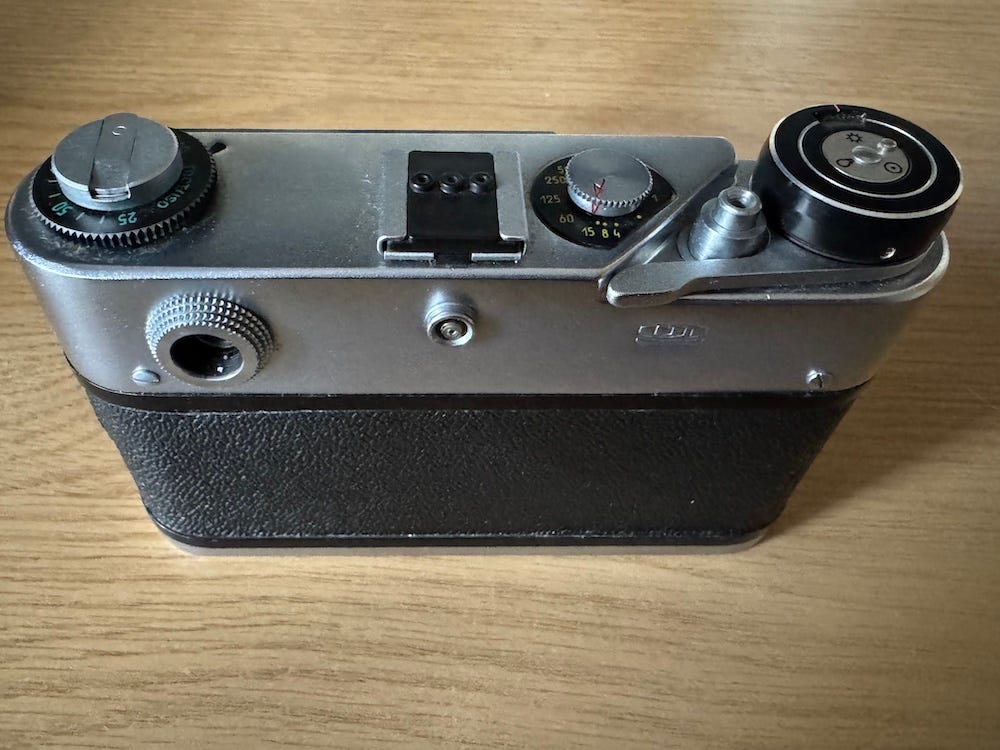
The advance lever is sturdy, I like that, but it’s hard to access; it requires a long action (around 270° turn) and once it’s released it is hard to catch it again with just the thumb. The shutter release button is situated on top of the camera between the film advance lever and a huge knob that does nothing but showing the frame counter and, as a result, it is not easy accessible. To me it is positioned in a very bad place. Ah, also it is made from two parts, aligned like a tower, the bottom part is actually the rewind button.
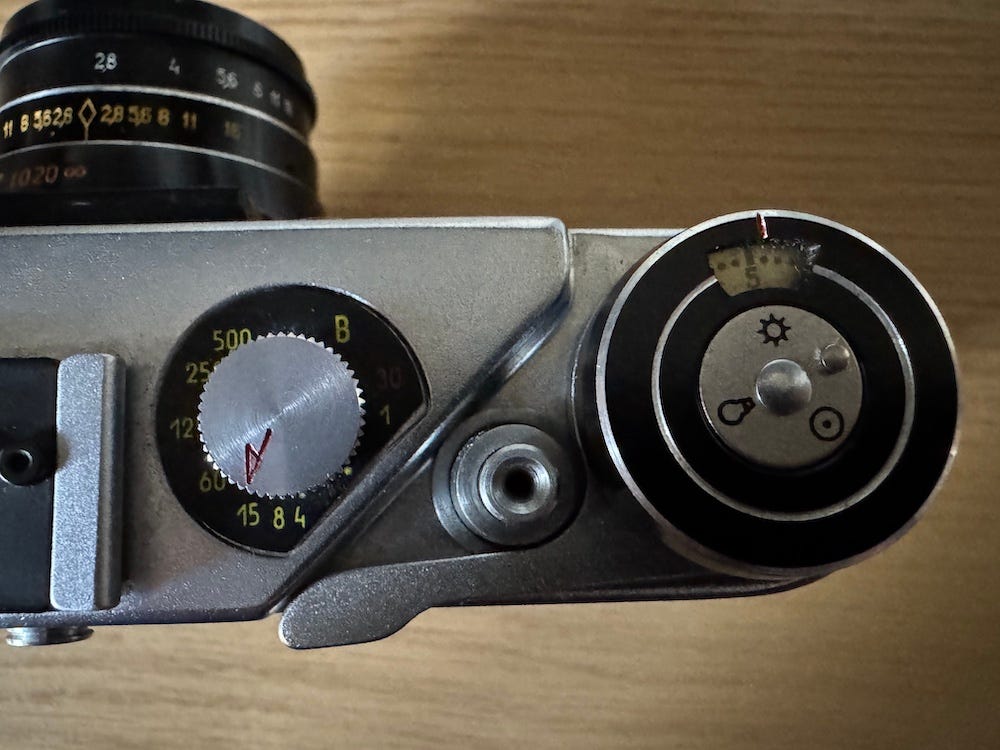
The shutter is situated on the focal plane and it’s metal made. Changing the shutter speed is not as simple as it seems: the knob is small and it is situated on top of the camera. In order to turn it to the desire speed (it works from bulb to 1/500 sec) the shutter has to be cocked otherwise turning the dial will break some pins inside the camera.
All of these sounds like one have to be more careful with manoeuvring the camera than concentrating to composition and taking the shot. It’s sound crazy but with a bit of practice it is possible.
So why do I bother with the FED? Because it is a different experience, somehow I compare it with not eating the same food every day.
I keep telling myself that I won't buy more... I do have some ideas for using my newest film cameras in some artistic (and hopefully sellable) endeavours. I'd love to have that Yashica.
f/1.8 on a 1960s camera? That's quite something!